Showing posts with label Joab. Show all posts

Tuesday, May 19, 2015

Nice Poem, Tough Guy

This is the study page for the Thursday Night Bible Study Group meeting May 21 to study 2 Samuel 23.  This is a very interesting chapter.  It starts with a poem, and winds up with a roster of some of the toughest guys in ancient history.  They're not 'creepy', but they do give the uncomfortable sense of not being 'safe'; at least not for 'bad guys'.

Read through the chapter a few times.  Spend some time on the poem, especially considering the contrast from chapter 22, like in tone and in possible situation.  I think this is more one from later in David's life rather than 22 being earlier.  What do you think?

Make notes as you read through, jot down questions.  It's easy to get lost in the names, so basically look for familiar ones, ones that don't fit the 'pattern' and so on.  Only after doing this should you consult commentaries.  The commentaries will make a lot more sense at that point.  Remember to use different translations as well.  That helps spot difficulties in language (especially in the poem, but also among the names).

After reading through, taking notes, jotting questions, and reading any commentary and alternate translations, go back through with the questions below:
  • Consider how David 'introduces' himself at the beginning.  Read it in a few translations.  What does verse 1 sound like to you?  Imagine it being said out loud.  Who do you imagine saying it?
  • Starting in verse 2, David speaks of himself and his house.  What do you think of his self-assessment?
  • Through verse 5, David speaks of the greatness of his house, but why is it great?  Where does his 'greatness' come from?  Why do you think he speaks about it in this way?
  • After verse 5, David begins to contrast his 'house' with 'others'.  Look at these others in other translations.  Who do you think he refers to here?  Find a King James version among your translations.  They don't even try to translate it, but simply use the Hebrew word.  Considering the wide range of translation options, what do you think it means?
  • Verse 8 begins the list of David's Mighty Ones.  The account begins with three, or the Three.  What makes these guys distinctive?
  • Can you imagine such a fight where one guy with a sword or spear defeats everyone?  How is that possible?  What do you think such a fight would look like?
  • Who won the victory in those encounters?  Why do you think that's important here?
  • Why, after they worked so hard, do you think David pours out the water before God?  What did he do with it?  Do you think that was 'better' than drinking it?
  • Everyone else is compared to the Three.  How do you think they compare?
  • Why do you think Joab isn't listed?  His brothers made it on the list, and he survived the reign of David, why do you think he didn't make it?
  • Abishai is left on his own in a way.  Why do you think that is?  How do you think he is compared to the "Three"?  So is he a 'good guy' or 'bad guy'?
  • Benaiah is next after Abishai.  What do your commentaries say about his 'snowy pit lion fight' if anything?  
  • He defeats one Egyptian.  How impressive is that considering the Three?  What do you think of him?
  • His role seems to be in charge of the bodyguards (the Thirty), or is he simply 'the Bodyguard' of David?  Look at various translations.  What do you think?
  • Then the list of the 'Thirty', and Asahel is first, but we know he dies early on before David is king over Israel.  So, is this a current list of David's body guard at the end of his reign?  Why do you think this list is included?  What's the writer's point with this list of the Three, the two, and the Thirty?  What do you think it says about David?
That should carry us through the hour (or so).  Be sure to bring your questions and notes!

Monday, April 20, 2015

A Gutless General And a Headless Fool

This is the Bible study page for the Thursday Night Bible Study Group meeting April 23 to study 2 Samuel 20.  This is another in a long line of strange tales from Scripture.  Joab, once again, comes to the forefront in all his bloody glory.

Read the chapter through a couple of times.  Be sure to use more than one translation.  Jot down observations, questions, and insight or application you gain as you read.  Then feel free to consult commentaries, either ones you have or anything on Blue Letter Bible.  Jot down any additional things you learn from your study of other resources.  After that, go back through with the questions below:
  • A certain worthless fellow happened to be where? Where did this take place?
  • Why do you think Benjamites are so problematic for David?
  • Why do you think, after having the debate of 19:9 and 10, does everyone now follow 'a certain worthless fellow'?  Or do you think everyone followed Sheba? What clues do you see in the chapter that may indicate only some of the men of Israel followed him?
  • Judah remains with David to Jerusalem (v.2), and he doesn't have Sheba pursued immediately.  Why do you think David isn't in much of a hurry here?  
  • What are your thoughts on the Ten Concubines?  Was David fair here?
  • Why give Amasa three days?  Why do you think three days isn't enough for Amasa?  Read that statement in several translations.  Does he wait three days to start gathering, or does it take more than three days to gather, or what?
  • Whatever the problem, David doesn't wait for Amasa and all the men of Judah.  He sends out his own personal 'ites' under who?  Who does he give instructions to?  Why him and not Joab?
  • The text is really clear about Joab being in his 'military garb'; well duh! He going to battle against a rebel, why do you think that detail is included?
  • Imagine the scene.  How does a sword 'fall out' of its sheath while a soldier is walking?  If it does, how does a person being approached not notice something that big?
  • If you've looked this passage over in several translations, you've seen some refer to Joab's 'dagger' at his belt.  Here's the word on Blue Letter Bible in the Strong's.  Why do you think they would translate it as 'dagger' here?
  • Look at this event closely.  Which hand does Joab use to strike the blow to Amasa's stomach?
  • Amasa wasn't 'on his guard'.  Why do you think the writer thought he should have been?
  • Why do you think the detail that Amasa's innards 'poured out' was included? Then that Joab didn't strike him again, and then that he's 'wallowing in his blood'?  What is your overall impression of how Amasa dies?  What did Joab do here?
  • Everyone (of Judah) stops at Amasa wallowing in his blood.  Why do you think they do that?  What are they thinking?  
  • The man left behind by Joab throws Amasa's body into a field and throws a cloak over it.  This seems to solve the problem of people following Joab.  How do you feel about Amasa?  What do you think of him?
  • See if you can find a map with Abel Beth-Maacah on it (good luck).  Where is place in relation to 'Gilgal'?  So, the detail that he 'went through all the tribes of Israel' isn't an exaggeration?
  • Why do you think Sheba went all that far if he's from Benjamin (right close to where he was)?
  • Read verse 14 in several versions.  Who do you think is doing what?  Read any commentary (the more the merrier here), what do they say about verse 14, if anything?  Why do you imagine this might be so hard to understand?
  • What do you think the people of Abel Beth Maacah are doing while the ramp is being built to tear down the wall? Do you imagine a battle?  Why not go out to talk to Joab before they start tearing down the wall?
  • Consider what the 'wise woman' says to Joab about their city.  Why do you think she terms it that way?
  • Why do you think the writer is so persistent in referring to the woman as 'wise'?
  • What do you think of Joab's side of the discussion? Is he really a man of peace?  He uses an oath or expletive that he would NEVER 'swallow up or destroy'.  Really?  Look at the wall! Hello!
  • Imagine this dialogue, this is cultural Middle Eastern negotiation.  What do you think of it?
  • What do you think of their solution?  Why does Joab recognize Sheba?
  • The list of who does what in David's kingdom seems out of place to me.  Why do you think it's here?
  • Joab is listed over the army.  Who is Benaniah?  Look him up in various resources.  What do you think of this guy?
  • If Adoram was over the 'forced labor' what does that tell you about life in Israel during David's reign?  Does this guy every show up again?  What do you think of that?
  • Jehosaphat is literally the one tasked with 'remembering'.  What do you think that means?
  • Sheva is the 'scribe'.  Look up this word in Strong's (follow link).  What might be a modern 'profession' that is like this?
  • Why do you think David has a personal priest?  We never hear of this guy anywhere else.  What do you think this guy does for David?
That should suffice for us this week.  Be sure to bring your study results to our group.  We need your perspective!

Tuesday, April 14, 2015

Rebuilding Burnt Bridges

This is the study page for the Thursday Night Bible Study Group meeting April 16 to study 2 Samuel 19.  This chapter, in some ways, closes out the account of Absalom, and in some ways sets up the next difficulty of David.  The importance of this chapter is really found in the maneuverings of David to reestablish himself as king.

Read it through several times, and jot down things you notice or questions you have about the story.  Note who does what, what is said, ask yourself 'why' (both why did he say that, and why did that detail make it into the story), and try to imagine seeing and hearing these events.

After reading through with your own observations and questions, then go to other resources to get other perspectives.  Use other translations, and if you have access to more than one commentary, use them.  Modify your questions and observations from what you read.

After having done your own work through the passage, go back through with these questions:
  • What do you think the people are feeling as they 'steal' into they city?
  • Joab has absolutely no remorse for having killed Absalom and buried him in pit in the woods. Why do you think he's behaving as he is?  What do you think he's feeling?
  • Considering the insult added to injury that Joab killed Absalom and feels no remorse, why do you think David puts up with this guy?  What clues have you found so far along this story?
  • David complies with Joab and goes down to the gate.  What do you think changed in David that enabled him to do that?
  •  Joab claims that David was being foolish, possibly selfish.  What do you think of what Joab said?  What do you think of how David responded?
  • The 'men of Israel' fled and then started arguing about why they rebelled in the first place.  Think through what they say, perhaps in a couple of translations.  What do you think of their reasoning?  Why did they rebel in the first place?  What happened?
  • David sends messages to Judah only.  Why do you think they were not included in the discussion among the 'men of Israel'? Or do you think they were?  If they were, then why do you think David reached out to them only?
  • Think through the content of David's appeal to Judah.  What two things does he use to turn them around to his side?  Why do you think he had to work that hard?
  • What do you think are some possible reasons that David replaces Joab so boldly and blatantly?
  • What do you think it means for Joab's position or reputation among the men of Israel and Judah that he's replaced like he is, and with who he's replaced by?
  • Judah returns to the king's side last, but arrives first at the Jordan.  Why do you think that is?
  • Who else arrives?  What do you think of Shimei that he works to bring David back?
  • Shimei is from Bahurim, which is where David's spies were hidden by someone.  What does that tell you about this village, and perhaps this revolt all together?
  • Shimei helps the people over, then stops before David asking for forgiveness.  What do you think that says about his character, if anything?
  • Think about what Abishai asks.  Why would he think that of a guy asking for forgiveness?  What do you think Abishai is thinking?
  • David again asks why he puts up with 'the sons of Zeruiah'.  They are always referred to this way.  What do you suspect that says for why they have remained in David's service?
  • David forgives Shimei, but glance ahead to 1 Kings 2:8,9.  What does this tell you of David's forgiveness? Do you think this is forgiveness as God sees it?
  • Okay, did you miss Ziba's appearance with his fifteen sons and twenty servants?  Read verses 16 and 17 over and over.  What does this sound/look like to you?
  • Who are the 1000 men with, Ziba or Shimei?
  • Verse 17 is typically translated that Ziba and his household were among the 1,000.  What do you think about that?  If Ziba and Shimei were 'buddies' what does that tell you about the two of them as David's leaving Jerusalem? They both acted very differently, but who do you trust if either of them?
  • Enter Mephibosheth, stage right.  How did he get to the Jordan if he was having so much trouble getting out of Jerusalem before?
  • What about him would have been very difficult to 'fake' if he was insincere?
  • What sounds 'funky' about Mephibosheth's explanation of why he didn't go?  Who's fault was it?
  • How exactly did Ziba deceive Mephi in this explanation?
  • What does Mephi rely on in his final plea?
  • What do you think of David's judgement on them?  Why do you think he would judge that way? Who are you in favor of?
  • What do you think of Mephi's response?
  • Barzilai is from the east side of the Jordan.  What do you think of his explanation about why it would make no sense for him to go to Jerusalem with David?  What does his explanation tell yo about what to expect being supported by the king?
  • We aren't told who Chimham is.  We don't know who his parents are, who his kids are, and this is the only place a reference to him is found.  Who do you think he is?
  • Who meets David at Gilgal to bring him over?  What do you think it means, 'half of the men of Israel' (or 'troops' or 'people' or 'army')?
  • So, if half are already there, who's left to be upset with Judah?
  • Think through the reasoning of both groups.  Which one makes more sense?
  • What do the men of Judah suspect the men of Israel suspect?
  • What really irritates the men of Israel about Judah's claim on David?
  • Imagine you're at the Jordan, at Gilgal.  Two huge crowds of men are arguing over David.  How do you feel?  What are you afraid is going to happen?
  • What does happen in the final verse?  Peek ahead, is that more what you expected?
That should keep us busy for a few minutes Thursday.  I look forward to seeing everyone then!

Tuesday, April 7, 2015

A Dangerously Big Head

This is the study page for the Thursday Night Bible Study Group meeting April 9 to study 2 Samuel 18.  This is an odd chapter.  It's also a great example of how I remember details wrong over the years.  I hadn't read this for some time, and I didn't remember David having so many people, and the battle being so bloody.  See why we keep reading?

Read through the chapter several times.  Sure, Absalom's death is funny in some ways, but think it through, imagine it, put yourself there.  It's not so funny really, but tragically ironic.  It's something that smacks of God in the details.  What about the other details though?  Look through those and again imagine the activity.  It means something that David has so many and that this battle is so costly.  Consider what that may mean.

As you go through the chapter, jot down notes and questions.  After reading through a few times, then consider commentaries.  As you read through commentaries, jot down more questions and observations.  It may be helpful, after reading any references you have, to go back through the chapter again.

After all that, go back through with the questions below:
  • It never says how many people David has, but considering the 'officers' breakdown, he has to have at least 3,000.  Considering he left with 600 fighting men, where do you think these came from?
  • He sets Joab and Abishai over troops, but why do you think Ittai?  He's a foreigner (from Gath), and David has others in his cadre who could easily have led.  What do you think it means or what do you think it says about Ittai that David sets him over troops?
  • The people don't want David to go out with them.  Consider chapter 21:17, which may not be in chronological order.  Do you think David thought it was a good idea to go, or that he thought it was 'right' or 'necessary' for him to go?
  • David tells Joab, Abishai, and Ittai to go easy on Absalom, and everyone hears it.  Why would he do that considering all that has happened?  Why do you think David is so hesitant to be hard on Absalom?
  • The 'forest of Ephraim' is part of what defines their territory.  Look up Joshua 17:15-18 and see what the people thought when they were given the land.  Look up the word 'forest' and see how you imagine this 'wood'.  What do you imagine the fight to be like, especially considering that more died from the woods, than from other soldiers? 
  • Who is favored in such a fight in such a difficult place?
  • Absalom meets the servants of David, and is then caught in the tree.  How do you imagine this happening?  It says his 'head', and then he hangs there.  How does someone catch their 'head' in a tree and then dangles there?
  • Some guy sees what happens to Absalom and tells Joab.  Look at Joab's response.  What has he decided to do regardless of what David said?  Why do you think Joab is so decisive even when David isn't?
  • Joab is mad at the guy for not killing Absalom there and then.  What does the guy's response tell you about how Joab is viewed, even among his men?
  • Considering that they guy tells Joab instead of simply capturing Absalom, what does that tell you about what the people thought about Absalom, and how to treat him?
  • Joab doesn't debate with the guy, but more importantly, doesn't disagree with him.  How do you imagine this 'discussion' looking/sounding like, as if you were there?
  • Joab thrusts THREE spears into Absalom (literally his heart).  Obviously, if he's still alive, this doesn't refer to the 'heart' as we know it, what might it refer to?
  • Joab has people carrying his stuff which explains how he is able to use three spears (these are fairly large weapons).  They circle Absalom and kill him on the ground.  This is a pretty terrible gruesome death.  Why do you think they are so vehement?
  • It says that Joab restrained the people.  What does that tell you about how the battle was going?
  • What do you think of Abaslom's burial?  This is very different from Ahithophel's where he was 'gathered to his fathers'.  So, how do you think Abaslom was viewed by the 'servants of David'?
  • All Israel flees, and then it remarks about Absalom's pillar.  What do you think happened to his sons mentioned in chapter 14 (14:27)?  
  • When do you think the pillar happened, those aren't 'instant' especially if they are to last?  What does that tell you about 'time' taken here?
  • Why do you think Ahimaaz is so adamant about going to inform the king?
  • Why do you think Joab doesn't want Ahimaaz to go?  He likes Ahimaaz, and considers him a great bearer of news, just not this news.  Why?
  • Cushites are from southern Egypt.  This is another example of a foreigner very loyal to David.  How does this idea that Philistines, Egyptians, and Ammonites serving David in service to God affect how you view Israel, and perhaps even God's acceptance of people?
  • Ahimaaz runs in a 'roundabout' route, but out runs the Cushite, arriving first.  Read through the 'watchman's' report a few times.  What about this seems 'odd'?  Perhaps read it in a few versions, noting the differences.  What's odd about it?
  •  David keeps saying, 'that means he brings good news' over and over, even when his basis of reasoning changes.  Why do you think he keeps saying this?
  • What do you think of Ahimaaz' initial report?  How do you imagine Ahimaaz sounding once he arrives?
  • The Cushite appears and finishes the account.  How does the Cushite seem to feel about Absalom's death?
  • Does your version have verse 33? Some do and some don't. The Hebrew doesn't.  In Hebrew and many English versions, it's verse 1 of chapter 19.  Where do you think it belongs?
That is plenty to keep us occupied.  Remember to bring your questions and observations to the group. See you Thursday!

Tuesday, March 10, 2015

Not Another Nathan

This is the Bible study page for the Thursday Night Study Group meeting March 12 to study 2 Samuel 14.  This is a really strange story.  The 'story-within-the-story' bothers me because I find it difficult to connect to the overall story.  There are a variety of problems with it, one of which is timing, especially toward the end.

As always, please read the chapter through a few times.  You may have read ahead, but if you didn't, go ahead and do so now.  But come back and re-read this chapter a few times after that.  Jot down questions, insights, lessons learned, and details that you had missed before that jump out at you now.

After reading through several times, go back through using the questions below:
  • Hebrew prepositions are pretty simple, and therefore have a huge range of interpretation.  The basic meaning in verse 1 is that the king's heart was 'on' Absalom.  This can also mean 'against', as in you 'lean against a wall' but also as in an adversary.  Consider the various translations you have, some on The Blue Letter Bible.  What do you think Joab 'saw' that he figured what was going on? What do you think David was doing that indicated his heart was 'on' Absalom?
  • Tekoa is in Judah (see map below).  Why do you think Joab goes there? Was it 'famous for wisdom'? Did he know of one particular 'wise woman'? Was it simply somewhere if Judah Joab knew David didn't know anyone? Is that even possible?
  • Joab 'put words in her mouth' (however a translation words it, that's how it was originally worded).  So, why do you think he need a 'wise woman' if it's his wisdom she's speaking?
  • Read Numbers 35:6-28 and Deuteronomy 19:1-13.  The 'avenger' is the word for 'kinsman redeemer' as in Ruth.  What do you think of this legal system in dealing with murders and manslaughter issues?  Considering the rules as they are related here (and keep in mind Numbers is an older witness of them than Deuteronomy), what was supposed to happen to Absalom?
  • Considering the story that the woman tells, how does her story relate to Absalom through these rules of the kinsman-avenger versus man-slayer?
  • The connection between her story and Absalom may be tenuous (and I think it is), but what do you think about her application of it to David?  What do you think of what she claims are the effects of David's refusal to relent toward Absalom?
  • So what do you think it mean for/to Absalom that he be allowed to come back 'free-and-clear'?  How do you think that sets up the rest of the story?
  • What do you think of Joab's response to being called out by the king?  What does that tell you of Joab's attitude toward David?
  • Why do you think David would let Absalom come back but not see him?  What do you think David was trying to achieve or prevent?
  • From verses 25 through 27, what do you think of Absalom?  How do you think he saw himself?
  • What about this 'Tamar', why do you think there is another?
  • What do you think is more likely, that Absalom waits two years before beginning to summon Joab, or that over two years, he summons him twice, then after 2 years burns his field?
  • Why do you think, after having gone through all of this to get Absalom back, does Joab not go see him when he is called for?
  • What does it tell you about Absalom that he summons twice, then sets Joab's field on fire to get his attention.  What sort of person is Absalom?
  • What do you think if Absalom's statement to either kill him or restore him fully?  What do you think David should have done?
That, and other stuff in this chapter, should keep us plenty busy.  Remember to bring your notes and questions to share in the group.  See you Thursday!

Tuesday, February 24, 2015

Secret Sin, Public Punishment

This is the Bible study page for the Thursday Night Bible Study Group meeting February 28 to study 2 Samuel 12.  This is where David is confronted with his sin.  It also forms the beginning of all his troubles in his reign.  On the other hand, you will discover some elements of God's grace hidden among the sadness and shame.

Read through the chapter a few times, and look especially for those elements of this familiar story that escaped you before.  There are some that had escaped me.  Note curious things, and questions about God, David, or other elements in the text.  After you've read through it a few times, read through with the questions below:
  • It may not be a big deal, but God sent Nathan to David.  What do you think it would mean if Nathan already knew, but God pushed him into confronting David?
  • Consider the elements in Nathan's story carefully.  Think about how each character is revealed, a piece at a time.  At first what do you think of the rich man?
  • Considering the detail given, how much do you think the rich man is concerned with his flocks & herds?
  • Considering the contrast just in the amount of detail given regarding the poor man's ewe-lamb (give her name, it will help you emote this through), what do you think of the poor man's obsession with his ewe-lamb (Lamberkins? Lamborgini? Lamberta?)?
  • A traveler comes to visit the rich man.  The wording is 'he spared his own' as he chose what to provide the traveler.  So, what do you think went through the rich man's mind as he 'opted' for his neighbor's sweet, tender, lamby-wammy?
  • The story ends, and David goes off.  Why do you think this might have resonated so strongly with David; you know, besides the obvious shepherd connection?
  • David calls the rich guy a 'son of death', yet says he should pay back four-fold.  Considering the details, how much would four lambs make up for what the one meant to the poor man?  How much 'punishment' is four lambs to the rich guy?
  • So, how 'in-tune' with the story do you think David really was?
  • Nathan then does the 'big reveal' by saying, "You the man!"  What do you think went through David's mind?
  • Nathan the Prophet then starts the 'Thus says the Lord' part (or the first one), and God lists out all he did for David.  Consider what's on the list.  What would you think God should, or could, have left off for David's benefit?
  • "Why have you despised the word of Yahweh?" is what God asks David.  Think about it, though, what does that imply?  What must David be familiar with in order for him to despise it? And so, how did he become familiar with it?
  • God then lists a litany of 'curses' on David.  What do you think of this list?  How bad do you think it is?
  • Nathan stops and there's a pause.  Consider David's response.  What does David's response reveal about David? How does how he receives his rebuke mark him as one still after the heart of God?
  • Since David repents, Nathan says that he will live.  What does that reveal about what was actually hanging in the balance?  What does that mean for us when we think we know the consequences of our own sin?
  • David won't die, but the child will.  How do you feel about God for this glimpse of His character?
  • Who do you think the 'blaspheming enemies of Yahweh' might be?
  • It takes seven days for the child to die. What does that say about God's character?
  • David fasts and lays on the ground while the child lives.  Why do you think he does this after God told him the child would die?
  • Who do you think these 'elders of David's house' are?
  • After the child dies, the servants of David stand around whispering.  What do you think they fear about David if they told him the child died?
  • David behaves rationally after the child dies.  What happened? Do you think there was any more to it than he stated?
  • Who was consoling Bathsheba?  What do you think David's role in that should have been?
  • What does David do first (after cleaning himself up)?  What do you think that says about his attitude toward God?
  • David worships, eats, then goes into Bathsheba.  Why do you think that was the right order, or do you?
  • Read verse 23 in as many translations as possible.  What do you think David means?
  • Who names the second son Solomon?  Why do you think he goes by that instead of Jedidiah?
  • What do you think Joab meant by the city will be named after him?  What other city was named for the conqueror that you can remember?
  • This account of the defeat of the sons of Ammon is much more detailed than chapter 10.  So, what do you think the 'city of waters' or 'royal city' refers to?
  • What do you think of David wearing the crown of the king of the sons of Ammon?
  • What do you think of the decision to give conquered people 'sharp iron implements'?  How wise is that?
  • So far, only one city of the sons of Ammon has been mentioned.  Now we read that all their cities were treated the same way.  What does that mean do you think?
That should keep us plenty busy for the evening.  Remember to bring your questions and observations!

Tuesday, February 17, 2015

Deadly Lack of Discretion

This is the Bible study page for the Thursday Night Bible Study Group meeting February 19 to study 2 Samuel 11.  Well, this is the one we all seem to know best.  This is where the life of David becomes a tragic 'soap opera'.  For him this is the turning point where so much of his life seems to slide downhill.  I can probably come up with a lot of other descriptive cliche's but you get the picture.

Per my usual instructions, read the chapter through a few times.  There's a better than even chance that you will find details you had always missed before.  You will probably notice elements to the story that you've never heard.  Please jot these down so we can discuss them Thursday.  One element that dawned on me is how many people in David's household were involved in all of this.  I always thought of it as some big secret, but seriously, there's no way.  What were some you noticed?

After reading it through several times, jotting down observations and questions, read it through again with the questions below:
  • It may have been the season when kings go out to war, but how odd do you think it was for David to remain in Jerusalem?  What do you think might be wrong here?
  • David walks about on the roof in the evening.  What do you think might be wrong with this?
  • While on the roof he sees some woman bathing, and she's pretty.  What do you think is wrong so far?
  • David inquires about her.  How do you think he accomplishes this? Who else is now involved?
  • What about David's inquiry do you think might be a problem?
  • After finding out about her, he then sends for her.  Now we've obviously crossed a line.  This is clearly wrong.  How do you think David got to this place?  
  • How long do you think it took, from seeing her from the roof, inquiry, to sending for her?
  • David sends, but they 'take' her, but she goes with them (read verse 4 in as many translations as you have available).  So, how much do you think was coercion, and how much was her willingness?
  • The NIV seems to imply this takes place after her 'period' (see Leviticus 15), but look at other translations as well, especially if you have a New American Standard.  It's certainly possible, otherwise it's confusing.  What are some interesting things we know now about such timing? (i.e.the 'calendar method'?)
  • So, the 'calendar method' doesn't work for them (what a surprise).  She sends to David letting him know she's pregnant.  As king, why do you think this is a big deal for him?
  • David sends for Uriah the Hittite.  He comes and David asks about the people fighting.  In each case, he uses the term, 'shalom'.  What does that tell you about the term we normally think of as some sort of divine peace?
  • Uriah refuses to go to his own house, but remains with David's servants.  Consider the elements of Uriah's reason given to David.  What kind of character does Uriah show here?  What sort of guy is this Uriah?
  • What do you think of Uriah's 'oath' in stating he will not do such a thing as go home?
  • David then tries getting Uriah drunk, but he still doesn't go home.  How is Uriah looking now?
  • Take a second, and consider Bathsheba.  How do you think she feel about her husband's devotion? If this is his character then in their life together, where is she in his 'pecking order'?
  • David sends Uriah back to Joab with a note...Uriah carries his own death warrant.  What do you think Joab thinks when he reads the note Uriah carries?
  • Joab complies, but it costs more than just Uriah.  How is David looking to you right now?  What do you feel as you read this particular piece?  That emotion is what the writer/editor is trying to evoke in the people of his day.  Why do you think he would do that?  What do you think is his point?
  • Joab sends a messenger back to David and gives him some rather strange details, guessing David will refer to a historical tactical lesson.  Read Judges 9 to get the back story on the 'lesson'.  But the messenger seems to jump to the part about Uriah without waiting.  What would you think if I told you that the older Greek text has David saying exactly what Joab expected?
  • What does it reveal to you about the historical setting that the story in Judges is so well known, that such stories are 'lessons' in tactics and God?
  • David is then consolatory with the messenger's return message to Joab.  What do you think the messenger thinks?  Consider only what he knows, what do you think he thought of all this?
  • For propriety, Bathsheba mourns for Uriah.  When the time is over, David brings her into his house.  What do you think everyone else thinks?  
  • Remember what the messenger knows.  Do you think he can connect the dots yet?
  • Do you think that after the battle the other soldiers moved a few more blocks away from the palace?
  • What do you think about the very last verse of the chapter?
That should keep us busy for two weeks, but we'll see if we can get it into one.  Remember to bring your questions, observations, and differences between how you thought it went and how you see it now.   I look forward to seeing everyone Thursday!

Tuesday, December 30, 2014

What Changed?

This is the Bible study page for the Thursday Night Group Meeting January 8 to study 2 Samuel 4 (possibly 5).  Chapter 4 is another link in the story of David's kingdom being established.  In this chapter events are aligned which remove the remaining obstacles between David and the rest of Israel's tribes; at least the obvious ones.  The passage of time between the accounts is never reconciled, and doesn't seem to be important to the writer/editor.

Read through chapter 4 and 5 together.  We may start 5, but they belong together even if we do them separately.  Really chapters 1 through 5 belong together, and are referred to as the 'succession narrative'.  There's another 'succession narrative' with Solomon, but after that, they're either short or non-existent.  A 'succession narrative' shows the various hurdles overcome to establish a king on a throne.  This had to happen every time a king came to power, even in Judah, but we only have the details of David and Solomon.

Remember to take notes, jot down questions, and see what you can find to reconcile problems you find.  There are plenty of places where the text seems to show what happens, but doesn't explain inconsistencies.  They drive us crazy, but didn't seem to bother the initial audience, or detract from the point of the author/editor.

After reading through a few times on your own, and with your own questions/notes taken, read through again with the questions below:

Chapter 4
  • Why do you think, if Ish-Bosheth was afraid of Abner, he 'looses courage' when Abner dies?  Why do you think he wasn't 'comforted'?
  • All Israel is 'disturbed' when Abner dies.  What do you imagine might have been their greatest concerns or fears?
  • Regardless of where "Beeroth" fell in the tribal regions of Israel, the point of the author/editor is that they are Benjamites.  Why do you think that would be important here?
  • Why do you think Mephibosheth is mentioned here?  Different commentators have different ideas about it, but what do you think?
  • In almost every translation, the deed of killing Ish-Bosheth is repeated.  If you have a New Living Translation, look at their wording for it.  The reason for the difference is that the NLT used the Greek text instead of the Hebrew at this point.  Keep in mind that the available Greek text is older than the Hebrew.  Which do you think is easier to explain as an 'editorial change', a duplication or a consistent story?
  • The two brothers go to David as quickly as possible.  Yet David seems to know the details of Ish-Bosheth's death already.  So how do you think that happened?  What are some explanations you came up with or found in commentaries? (there aren't wrong answers here)
  • David refers to the death of the Amalekite who announces Saul's death to him in Ziklag.  Do you think, considering how people in this story seem to know so much, these guys hadn't heard that particular one?
  • Again David has someone kill the 'bearers of "good news"' in a way.  Why do you think he didn't do this with Joab when he killed Abner?  For some context here, read 1 Kings 2:5 and 6.  What do you think it is about Joab that 'protects' him from David?
Chapter 5
  •  The elders of the all the tribes come to David, finally.  Considering what they say to him, why do you think it has taken them so long to come to David?  Who's death do you think really cinched it for them, Abner or Ish-Bosheth?
  • They site the prophecy that David will shepherd Israel.  Where do you think they heard that?  Was Abner the first or was it widely distributed around prior?  There is a historical saying that the 'victors get to write the history'.  How much of that do you think might be happening here?
  • After the elders make their statement, they make a covenant with David, and anoint him king over all Israel.  What do you think made up the covenant?  Was it a 'Bill of Rights' sort of thing or do you think it was what they were willing to do?  There's no record of it, so it's all guess.
  • The timing issue comes up again.  Seven years and six months over Judah in Hebron, does that mean only Judah?  The impression this gives is that as soon as he was anointed king, he takes Jerusalem.  So, how does Ish-Bosheth only reign 2 years over all Israel while David reigns seven over all Judah?
  • It says 'The king and his men' came to Jerusalem.  Some think this just means the 600 who followed David before he became king.  Some think it just refers to the army in general.  Why do you think it would be important for David to take Jerusalem without the help of the other tribes?
  • The Jebusites are Caananite hold-outs against Israel, but also against the Philistines.  They are very confident in their city defenses.  What does David seem to know that other attackers don't?
  • Verses 1 through 5 seem to establish that David is anointed (accepted by the other tribes, finally). Six through ten are the establishment of Jerusalem as his capital.  Eleven through sixteen are the establishment of his 'dwelling' and life there.  Why do you think this progression is so important to his ascension to the throne of Israel?  Why all the detail about his wives, concubines, and sons for instance?  The writer did this for Hebron too, so what do you think is the point?
  • Seventeen through the rest of the chapter, is the defeat of the Philistines.  What do you think might be significant about the 'place' where they fight (The Valley of Raphaim)?  
  • What, if anything, might be significant about 'all the Philistines' going up to fight David?
  • In the first defeat of the Philistines, David takes spoils of idols.  Why do you think that might be significant?
  • In the second defeat of the Philistines, they pursue them to their cities.  Why do you think the difference might be important?
  • In both instances David inquires of God.  Each time he gets a different answer.  So how do you imagine this happening?  What does David do to inquire?
  • The response the second time has some interesting detail.  What does this detail mean for the method David used to inquire?  How does this detail influence how you imagine David inquiring of God?
  • David has success, lots of it.  Yet his victories still are due to his inquiry of God.  What does that say about our lives?  Do you see the value of knowing how David inquired of God?  How can we also inquire of God?
We'll focus on chapter 4 and see if we make it into 5.  See you all Thursday!

Tuesday, December 16, 2014

Revenge and Politics

This is the Bible study page for the Thursday Night Group meeting December 18 to study 2 Samuel 3.  This chapter has lots of very peculiar elements in it.  Some of the high points are David able to make a covenant with Abner that will bring the other tribes over to him.  The low point is the murder of Abner.  How all this plays out is the makings of a good story or epic movie.

Read the chapter over several times.  You can read ahead as chapter 4 rounds out this part of David's story, and from there we take a very different turn.  As you read through this chapter be sure to jot down things that seem very odd, questions, and any observations about the story or wording.  And please bring those notes and questions to the group with you.

After you read through a few times, with your own notes and question, go back through with the questions below:
  • It doesn't say how long the war between David and Ish-Bosheth lasted, but why do you think this is a good setup for what happens between Ish-Bosheth and Abner?
  • Sons were born to David.  One commentator said there was something important about there only being one son to each wife.  Why do you think that would be important?  
  • How do you think Abner might have been strengthening his position within the house of Saul, and why do you think he would do that if the 'house' is failing?
  • Why do you think 'going in to' Saul's concubine would have been so serious?  Or was it serious since Ish-Bosheth only mentions it, and doesn't try to actually punish Abner?
  • After strengthening himself in the house of Saul, consider how quickly he switches loyalty.  What do you imagine is going on with Abner at this point?  Do you think he's that erratic or is it just the story, or what?  What if he's actually quite clever?  What would these two elements (his strengthening his position, and then switching to David) mean if he were actually being very clever?
  • Consider how he phrases his giving the kingdom to David in verse 9.  What then is known about David that we may have assumed was a private thing?
  • If Abner knew that God promised the kingdom to David, why do you think he set up Saul's son in the first place?
  • Ish-Bosheth is afraid of Abner, what do you think Ish-Bosheth believes will happen next, and why?
  • Consider that Abner sends messengers to David, specifically on his own behalf, yet it's Ish-Bosheth that sends for Michal.  And then, when she comes, it's Abner who sends Paltiel away.  What do you think this means?  What do you think is going on here?
  • After getting Michal, then Abner goes to the elders of Benjamin and Israel.  Why do you think it's so important to specify Benjamin here?
  • After he's spoken to the elders Abner goes to Hebron with 20 men.  What do you think was on the list of things that Israel and Benjamin wanted to do, or is this just a way of referring to the people all wanting to make David king?
  • Abner goes to assemble the people of Israel and after he leaves Joab shows up.  Considering that Joab returns from a very successful 'raid', how do you think he is feeling right now?
  • Joab hears that Abner was here, and he goes to chew out the king.  Why do you think David puts up with Joab?
  • Joab has Abner return and then kills him in the gate.  Consider that it also says that Abishai is also somehow involved.  Why do you think it might be significant that Abner dies in the gate?
  • What does Joab claim was Abner's reason for coming to David?  How reasonable does this sound to you?
  • When David hears of what Joab does he actually curses Joab and his family line.  Why so severe a response, yet David leaves Joab as 'general'?
  • David tells Joab and his 'people' to mourn Abner, and then follows the mourning of David over Abner.  How authentic does David's response to Abner's death seem to you?
  • Consider how the people, both local to David in Hebron/Judah and those of all Israel think of David's mourning over Abner.  They clearly thought he was being authentic.  Why would he be so adamant about how important Abner was to Israel?  How likely is it that Abner really was a quality guy and everyone simply saw that and acknowledged that in him?
 That should keep us busy for an hour or so.  Please be sure to bring your questions and observations.  There's lots of room for speculation, and sometimes getting us thinking about it opens us up to what the Spirit who inspired these things wants us to get from it.

Tuesday, December 9, 2014

Fun On The Hill And At The Pool

This is the Bible study page for the Thursday Night Group meeting December 11 to study 2 Samuel 2.  This chapter has some odd elements in it.  The characters behave in odd ways, and the story is a bit odd or at least difficult to imagine.

Read through the chapter a few times.  Perhaps reading ahead would help gain some context.  As you read through, jot down observations, questions, and insights.  Look for elements that demonstrate the influence of God.  Sometimes they are more difficult to find than you would expect because you end up having to infer them.

After you've read through a few times, read back through with these questions:
  • Why do you think David is inquiring of God at this point?  What is his circumstance?
  • Consider God's answers.  Try and imagine the process to ask the questions from the answers.  What do you imagine is happening?
  • Both Carmel and Jezreel are actually in Judean hills, but more famous places with these names are found in the north.  Why do you think it might matter that these wives are 'local'?
  • Read 1 Samuel 30:26-31.  What influence do you think this had on the men anointing David as king?
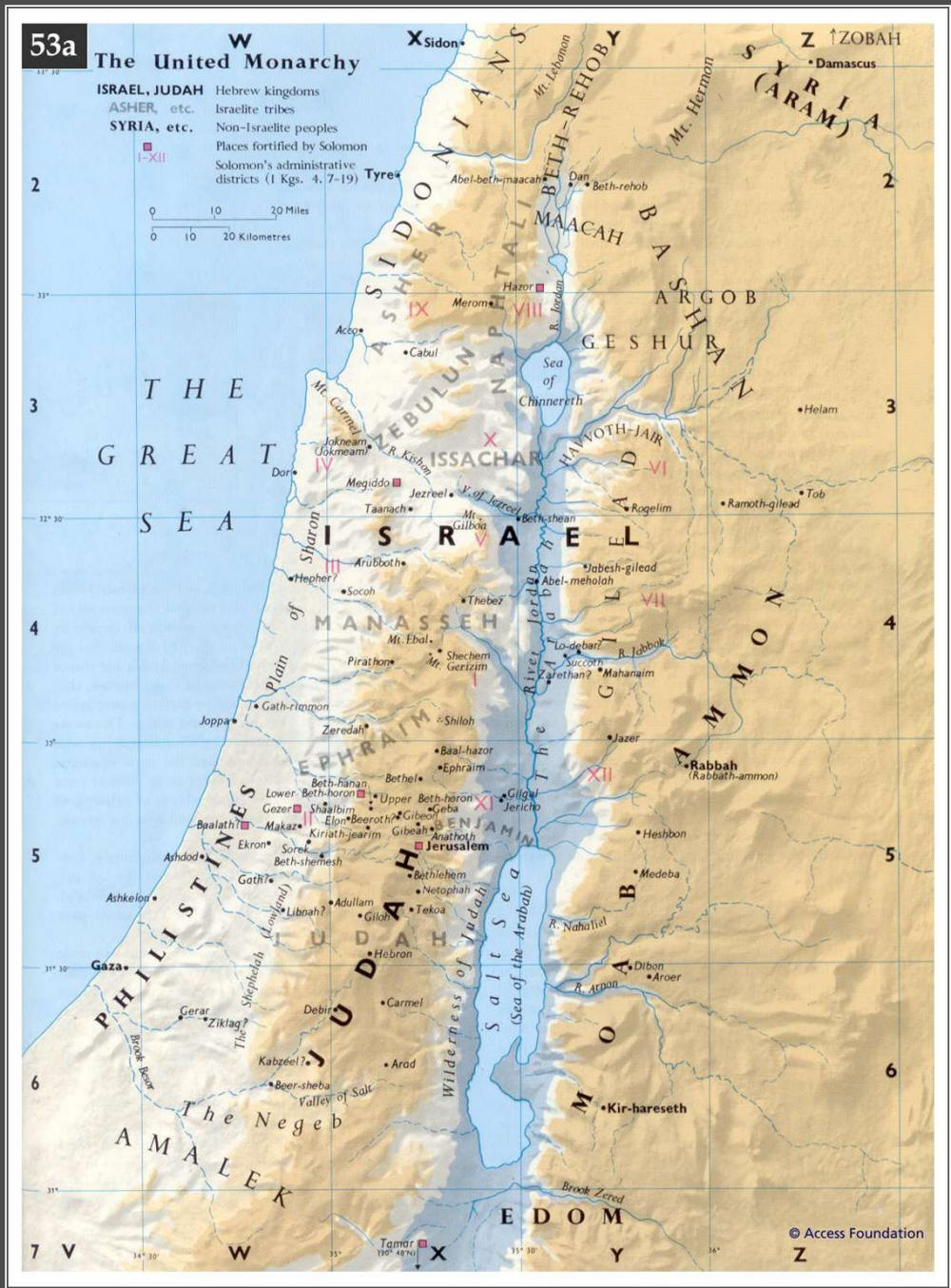
  • David finds out what the men of Jabesh-Gilead did for Saul and Jonathan, and sends a blessing to them.  Many commentators say this was 'shrewd' on David's part to gain support, but look at where Jabesh-Gilead is in relation to Judah (see map below).  What do you think are some other alternatives?
  • Consider the content of David's message.  Why do you think David would want to 'bless' them and return their kindness onto them?
  • Why do you think David mentions his 'kingship' in Judah?  Do you think he's being shrewd or do you think he's simply validating his ability or resources to bless/do kindness to Jabesh-Gilead?
  • Abner becomes a character at the forefront of the story here.  Considering that Abner was Saul's uncle, why do you think he wouldn't simply try and become king?
  • Look at 1 Chronicles 8:33.  Considering that 'Baal' was also a term for the Hebrew God early on, what is the difference between the names?  Look up the name in 1 Chronicles 8:33 here, and the name in 2 Samuel 2:8 here.  What do you think is important and meaningful in the difference?
  • Find Mahanaim on the map below.  Why do you think it made sense to make the 'capital' there?  What do you think that says about the 'strength' of the new 'king & country'?
  • If Ish-Bosheth was 40, why wasn't he at the battle, and how old was everyone else if he's the youngest?
  • Ish-Bosheth reigned two years and David 7 in Hebron.  What do you think happened to the 5 years difference?
  • There's no real explanation about how they meet up in Gibeon.  If you check commentaries and your study Bibles, there will be differing opinions.  Why do you think Abner wanted to turn it into a 'battle' of sorts?
  • The 'battle' didn't end up going Abner's way.  Imagine how it begins, consider the wording and the explanation of the place-name, what do you think is the writer's point here in describing it as he does?
  • Zeruiah was David's sister, and her three sons were part of David's warrior band, and Joab was his 'general'.  This is important for the next few chapters.  Why do you think, as fast as Asahel was, he couldn't catch the much older (like, well-over-60 older) Abner?  What do you think he was doing?
  • Why doesn't Abner want to kill Asahel?  Remember that!
  • How hard must they have been running for the butt-end of the spear to pass through Asahel?
  • Everyone stops at the place where Asahel dies, except for his two brothers.  Why do you think they kept going?  Why do you think they really stopped when they did?
  • Abner was the one who suggested the 'battle' in the first place.  Why do you think he would blame Joab for continuing it?
  • Joab says he will stop because Abner said what he did.  What do you think are some other reasons he would stop the pursuit?
  • Consider how long Abner and his men walk (v.29).  Then consider how much Joab and the people accomplished in the same time.  Look at the map below.  Who traveled further?
  • Consider the huge difference in how many were lost on each side.  What do you think that means?  Why do you think it would be so lopsided?

That should keep us busy for a bit.  Remember to bring your notes and questions to the group Thursday.