Tuesday, December 9, 2014

Fun On The Hill And At The Pool

This is the Bible study page for the Thursday Night Group meeting December 11 to study 2 Samuel 2.  This chapter has some odd elements in it.  The characters behave in odd ways, and the story is a bit odd or at least difficult to imagine.

Read through the chapter a few times.  Perhaps reading ahead would help gain some context.  As you read through, jot down observations, questions, and insights.  Look for elements that demonstrate the influence of God.  Sometimes they are more difficult to find than you would expect because you end up having to infer them.

After you've read through a few times, read back through with these questions:
  • Why do you think David is inquiring of God at this point?  What is his circumstance?
  • Consider God's answers.  Try and imagine the process to ask the questions from the answers.  What do you imagine is happening?
  • Both Carmel and Jezreel are actually in Judean hills, but more famous places with these names are found in the north.  Why do you think it might matter that these wives are 'local'?
  • Read 1 Samuel 30:26-31.  What influence do you think this had on the men anointing David as king?
  • David finds out what the men of Jabesh-Gilead did for Saul and Jonathan, and sends a blessing to them.  Many commentators say this was 'shrewd' on David's part to gain support, but look at where Jabesh-Gilead is in relation to Judah (see map below).  What do you think are some other alternatives?
  • Consider the content of David's message.  Why do you think David would want to 'bless' them and return their kindness onto them?
  • Why do you think David mentions his 'kingship' in Judah?  Do you think he's being shrewd or do you think he's simply validating his ability or resources to bless/do kindness to Jabesh-Gilead?
  • Abner becomes a character at the forefront of the story here.  Considering that Abner was Saul's uncle, why do you think he wouldn't simply try and become king?
  • Look at 1 Chronicles 8:33.  Considering that 'Baal' was also a term for the Hebrew God early on, what is the difference between the names?  Look up the name in 1 Chronicles 8:33 here, and the name in 2 Samuel 2:8 here.  What do you think is important and meaningful in the difference?
  • Find Mahanaim on the map below.  Why do you think it made sense to make the 'capital' there?  What do you think that says about the 'strength' of the new 'king & country'?
  • If Ish-Bosheth was 40, why wasn't he at the battle, and how old was everyone else if he's the youngest?
  • Ish-Bosheth reigned two years and David 7 in Hebron.  What do you think happened to the 5 years difference?
  • There's no real explanation about how they meet up in Gibeon.  If you check commentaries and your study Bibles, there will be differing opinions.  Why do you think Abner wanted to turn it into a 'battle' of sorts?
  • The 'battle' didn't end up going Abner's way.  Imagine how it begins, consider the wording and the explanation of the place-name, what do you think is the writer's point here in describing it as he does?
  • Zeruiah was David's sister, and her three sons were part of David's warrior band, and Joab was his 'general'.  This is important for the next few chapters.  Why do you think, as fast as Asahel was, he couldn't catch the much older (like, well-over-60 older) Abner?  What do you think he was doing?
  • Why doesn't Abner want to kill Asahel?  Remember that!
  • How hard must they have been running for the butt-end of the spear to pass through Asahel?
  • Everyone stops at the place where Asahel dies, except for his two brothers.  Why do you think they kept going?  Why do you think they really stopped when they did?
  • Abner was the one who suggested the 'battle' in the first place.  Why do you think he would blame Joab for continuing it?
  • Joab says he will stop because Abner said what he did.  What do you think are some other reasons he would stop the pursuit?
  • Consider how long Abner and his men walk (v.29).  Then consider how much Joab and the people accomplished in the same time.  Look at the map below.  Who traveled further?
  • Consider the huge difference in how many were lost on each side.  What do you think that means?  Why do you think it would be so lopsided?
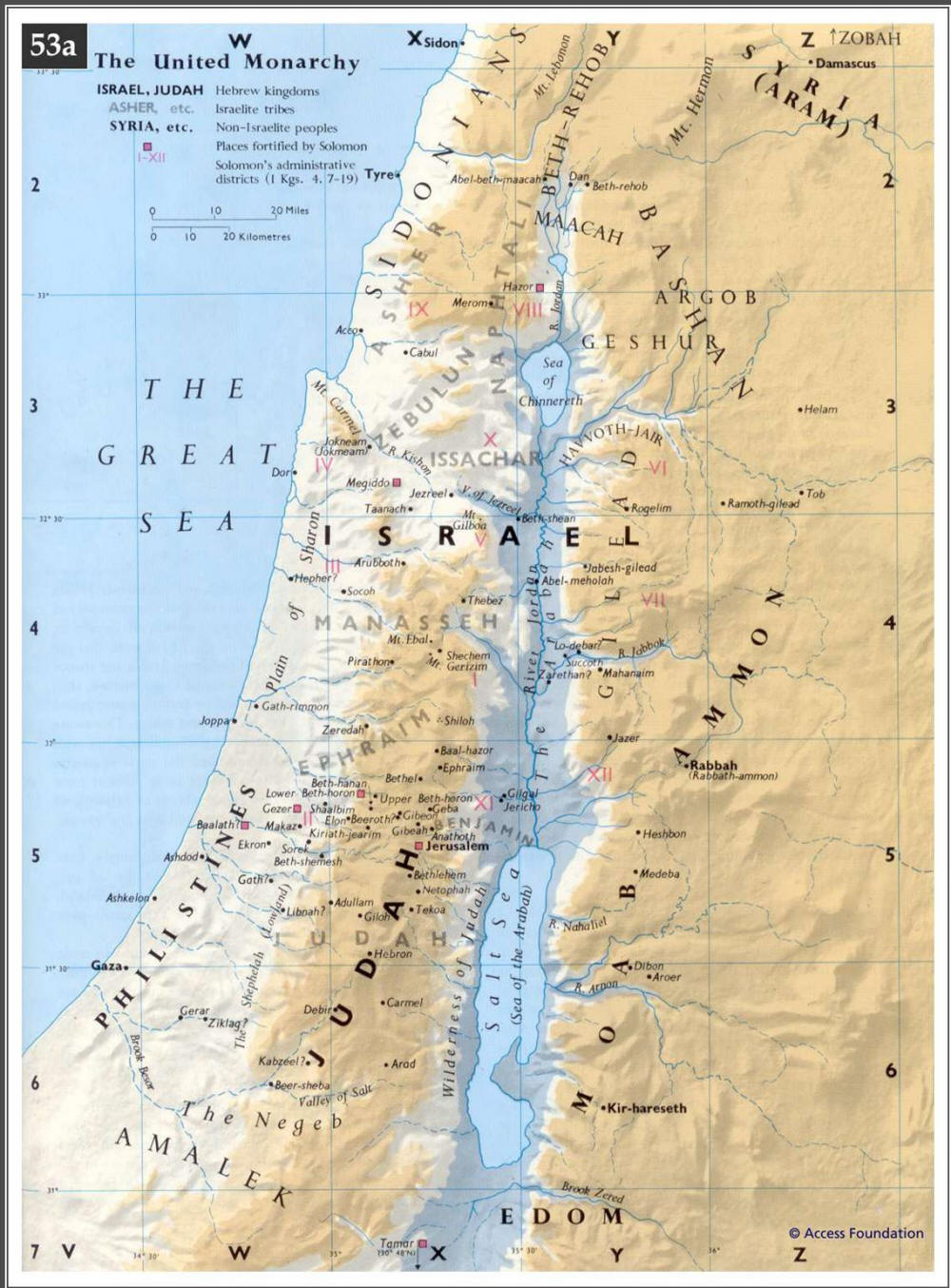
That should keep us busy for a bit.  Remember to bring your notes and questions to the group Thursday.

Monday, December 1, 2014

Bearing Bad News Can Be Hazardous

This is the Bible study page for the Thursday Night Bible Study Group meeting December 4 to begin the study of 2 Samuel.  We will be going over a brief book introduction, and perhaps finishing chapter 1.  This book is essentially about David's reign.  There is a brief connective break between the books of 1 and 2 Samuel, but this may have been only because the two books didn't fit on the same scroll.  Essentially they form 1 book.  The book of Samuel fits into the same narrative style or 'family' as Kings (1 and 2 Kings), which continues the account of the monarchy in Israel and Judah.

The breakdown of content is essentially as follows:
  1. The transition from judges to a monarchy (1 Samuel)
  2. The reign of David and the suppression of tribal distinctions (2 Samuel)
  3. The reign of Solomon and the height of the Hebrew kingdom (1 Kings)
  4. The fracture of Israel along tribal/geographical lines (2 Kings)
The overall story is about the eventual fall of the nation as a whole, explaining it as a result of an idolatrous life lived in rebellion against God and His law.  The beginnings leaving the confederacy of judges with God as 'King' is signaled as the first step in the wrong direction.  The total wreck of Saul's reign highlights this.  David and Solomon are seen as both the highpoint of devotion to God, but also the turning point away from God (the end of Solomon's reign).  In the end, the only hope offered is the 'release' of the last true king of Judah, but the people remain in captivity.  This leads scholars to conclude that Samuel and Kings were completed during the captivity, possibly/probably in captivity.

Read through the first chapter several times.  Then go back and read the last two or three chapters of 1 Samuel (29-31).  Read ahead in 2 Samuel to get a sense of what is being 'setup' here.  Read the first chapter again a few times.  Ask questions, make observations, prayerfully seek those things that illuminate God's character, His relationship with His human creatures, and His desires for them.

After you have read through a few times, read back through with the questions below:
  • Verse 1 sets the timing.  About how many days have transpired after the death of Saul? (you will need to have read the final chapters of 1 Samuel for this one)
  • What do you think it means that the man's clothes are torn and he has dust on his head?  What is this a sign of?  What do you think of his sincerity in how he looks?
  • The man brings bad news about the battle.  Since David had seen the assembly of the Philistines, how surprised do you think he was?  
  • Consider the way the battle is described in 1 Samuel 31.  The people who fled the battle fled from where?  All the fallen seemed to be on Mount Gilboa.  So where did this guy fit in that narrative in chapter 31?
  • What do David and his men do when they hear of the battle?  What does this mean for David and his men?  Why so loyal to Saul?  Or do you think they mourn more the people than the king?
  • After this initial response, David further inquires of this 'messenger'.  What's the difference between his first and second set of questions?
  • Considering the recent battle David was involved in and why, why do you think the man's heritage as an Amalekite might not work in his favor with David?
  • After the messenger is killed, David writes a 'dirge' for Saul and Jonathan.  Considering the meaning of 'Jashar' what do you think would make a good 'English' title for such a book?
  • The repeated phrase, 'How the mighty have fallen' just sounds familiar.  Where have you heard it before this?
  • The parallel nature of this poem is easy to spot throughout.  Consider the greater parallel structure, like topic started (the fallen people/Mt. Gilboa), topic in the middle (Saul and Jonathan), and topic at the end (Jonathan).  If the middle one is supposed to be the focus, what is David's focus in this poem?
  • On the other hand, the phrase 'how the mighty have fallen' might form the hinge between sections (beginning, transition, ending).  In that case, there are only two sections, and the second would be the focus.  So, what do you think was David's true lament in that case?
  • How else might you break the poem up into pieces?
  • What do you think of David lamenting his enemy the king?  What do you think of his vengeance on behalf of his enemy the king?  Why do you think this may have been a brilliant political 'tactic' on David's part?
That should be enough to get us started on this new book.  Remember to bring your notes and questions!

Monday, November 10, 2014

One More Last Thing

This is the Bible study page for the Thursday Night Group meeting November 13 to study the last chapter of 1 Corinthians, sixteen.  This chapter is a typical concluding chapter of Paul's letters.  It's full of lots of housekeeping and last minute challenges, greetings, soft words, and hard words.

Read through it a few times, perhaps, if you're ambitious, read through the whole letter, and then through this chapter a few times.  Try and get a sense of what Paul is trying to make sure is not lost, what he is attempting to shore up or emphasize, and perhaps a view of his heart.  Jot down notes, observations, and questions to bring Thursday.

After reading through a few times, made notes, and questions, read through again with the questions below.
  • The 'collection' is a new topic for the letter, but do you think it is new to the church in Corinth?
  • What is the purpose of verse 2, why do you think he's giving this instruction?  Do you think it is a slight to the church in Corinth or a general suggestion/rule?
  • The collection is for believers in Jerusalem.  Why would the church in Corinth be all that interested in the church in Jerusalem?  What would be their motivation for sending money?
  • Paul's travel arrangements are simply details, but do you see a pattern of his travel?  What route is he following to get to them?  (see Acts 16 and 17)
  • Why do you think Paul would want to spend so much time with a group with whom he seems to have so many problems?  What does his tone sound like to you?
  • Timothy may come before he gets there.  Why do you think Timothy may have cause to 'fear' from the Corinthians?
  • So, do you sense Apollos does or does not want to go see them?  What do you think about Paul encouraging him to go?  What do you thing that might mean for other comments made by Paul in the beginning of the letter (see chapter 3)?
  • Verse 13 begins a 'staccato' stream of commands, what do you think of these?  Why do you think they would be necessary for the believers in Corinth?
  • In verse 15, is a charge to submit to leaders, and Paul names one specifically.  Considering the problems he has sited throughout may have been with 'leaders' or household 'church hosts', what do you think of his 'short list'?  Why do you think naming this one is important?
  • Now the named leader is also the one who, with some others delivered help from them to him.  So, what does that tell you about 'collections' in the church?  What does that tell you about Stephanas?
  • Review Aquila and Prisca (Acts 18). What do you think of these two?  How does this greeting fit their depiction in Acts 18?
  • Greetings like this seem odd to us in our culture, but aside from that, what do you think of the differences between the greetings from 'Asia' and how Paul says to greet each other?  Why do you think he may have used that term?
  • Why do you think it is important for Paul to write something in his own hand?  Why the additional 'love' charge?  This term for 'love' isn't the normal 'agape' love normally used, it's more a 'friendship' sort, more emotional.  Why do you think that might be important here?
  • In his own hand he says that his love is with them all.  Why do you think that is important for the church in Corinth to know?
 That should keep us busy for a few minutes anyway.  Remember to bring any notes and questions you've made in your own study!

Monday, November 3, 2014

To Become Other Than We Are...

This is the Bible study page for the Thursday Night Group meeting November 6 to study 1 Corinthians 15:35-58.  This is the part we didn't get to last week.  So, I included the questions from last weeks study page for these verses, but also added a bit to them.

Read through the whole chapter at least once, then focus your attention on the final verses of the chapter.  Read them a few times, try to imagine what this means for our bodies, what will we look like?  Jot down observations and questions.  We had a good one last week, and I wrote a blog entry on it.  These questions are really very helpful for our discussion and understanding.

After reading through the passage and doing your own search for things, read back through with the questions below:
  • In verse 35 is thought to be another break, but I suspect that actually it goes with verse 33 and 34.  So, I would break at 33 not 35.  What do you think?  How would it read if we started this paragraph at 33?
  • From 35 through much of the rest of the chapter, Paul argues for the reality of the resurrection in more concrete terms.  Paul draws on imagery from plants and animals, but what do you think his main is point in verses 36 through 41?
  • What do you think of his contrasting argument after verse 41?  Does this clarify or obscure your understanding?
  • Why do you think it is necessary that if there is a physical 'body' there must then be a spiritual 'body' as he says in verse 44?
  • Look up the term 'natural' used twice in 44, and then again in 46 in a Strong's Concordance (or click the link on the word).  It's related very closely to the Greek word normally translated as 'soul', and where we get the word 'psychology' from; 'psyche'.  If we translated the word as 'soul-ish', or 'pertaining to the soul', how would that change your understanding of what the 'soul' refers to in Scripture?   
  • Paul uses contrast for his description of a resurrected body in verses 42 through 49, but then in 50 and to the end, he completely changes how he presents resurrection.  It's almost worship or prayer of praise, or something.  How does Paul's description in 50 through 58 give you hope personally?
  •  Verses 50 through 57 are the depiction of the contrasts in verses 42 through 49 which will happen to us when Jesus returns.  What do you feel as you read this depiction?
  • Rather than discuss 'when' all this will happen in relation to things in other letters and books, consider what will happen.  What do you think this will look like?
  • The implication of verse 58 is that the Corinthians have not been steadfast so far.  What do you think happened to cause them to waver?  How do you think this has or does happen to us?
This will probably take up our whole time.  There's a lot in this passage, but I would like to avoid 'end-times' discussions as far as when-what-happens-to-whom sorts of stuff.  Let's try and confine our discussion to what it will look like.  But, as I said at the beginning, if it's about Scripture, it's a valid topic to discuss, so that has to include 'end-times' topics as well.

Tuesday, October 28, 2014

Point, Resurrection

This is the Bible study page for the Thursday Night Study Group meeting October 30 to study 1 Corinthians 15.  This is a pretty focused chapter (resurrection), but convoluted in approach.  One of the most problematic statements in Scripture is found here.  The transitions are odd, the structure of his argument a bit difficult to sense, and some elements are just down right confusing.

While some of the difficulties are due to a missing historical context or detail, some just are that way and would have been for them too.  Another issue is that this is possibly the most technically theological chapter in the entire letter.  I suspect that this chapter forms a major foundational element to how the commentator I've been reading understands the rest of the letter; that the church held a totally busted end-time view.

Some of what we'll find has to do with a mixing of pop-philosophy with the theology Paul taught them.  Sometimes, if they couldn't explain something Paul taught, they just ditched it in preference to the popular philosophical idea.  But that doesn't work in every problem we face in this chapter.

Read through the chapter a few times.  You may find it helpful to read the whole letter to see if you can find any of these concepts throughout the rest of the letter.  Jot down questions, observations, and insights you gain as you read through it.  Try and find Paul's structure to his argument.

After you've complied a good list of questions and observations, read through again with the list below:
  • Why do you think, at the end, finally, he brings up the 'gospel' which he goes to great lengths to substantiate with a 'pedigree'?
  • Verses 1 through 11 stand as one piece.  What do you think is the point of this first piece of Paul's argument?
  • What two things does Paul specifically point to which he says are Scriptural?  Where do you think he gets that?
  • In verse 12, Paul reveals that there are some who say that there is no resurrection.  Read Acts 17:22-32, where might this problem be coming from?
  • Verses 12 through 19 seems to set off a second element, though not necessarily.  Here Paul stress the problems we face if there is no resurrection.  What do you think of these problems?
  • Why would it be necessarily true that no resurrection means Jesus wasn't raised?  What is it about Jesus do you think Paul refers to here?
  • Paul 'chains' four things together from verse 13 through 15.  What do you think of his progression here?  It makes some sense, but what about the 'false witnesses' piece, how do you think that fits in the progression, or does it?
  • In verses 16 through 19 seems to start his point from 13 over again.  This progression is very different though.  Why do you think if Jesus died for our sins, but wasn't raised, we're still in our sins?  Wasn't it 'the cross' that saves us?
  • In verse 18, Paul says then that those who die, really are lost, and then in 19 that we have no hope.  What do you think of his argument here?  What hope is there if there is no resurrection?
  • In verse 20, Paul possibly begins a third section/point.  Here Paul begins a discussion on one of his favorite topics, Jesus over against Adam as the 'antithesis' of the fall.  How difficult is it here to see Paul's connection between Jesus and Adam?  
  • In verse 23, there is now some sort of order in resurrection, and Paul describes the end times.  As you read verses 23 through 28, do you think Paul is assuming that Jesus reigns now?  That His Kingdom is current?
  • The last enemy is death, which, for Paul, requires resurrection.  But when do you think this enemy will 'fall'?
  • Finally, in verses 27 and 28, Paul describes a convoluted authority structure between the Father and the Son.  What do you learn of God's 'Trinitarian' nature from this description?
  • Okay, so 'Baptism for the dead'; what commentary do you find on this subject?  Just bring it, because this is perhaps one of the weirdest side comments in all of Scripture.
  • In verse 30, Paul goes into why he risks his life.  Why would he if there is no hope of resurrection?
  • In verses 29 through 32, Paul is unpacking the lack of hope, but what turn does his argument take in verse 33?  What do you think 'bad company' might mean for this issue?
  • What clue do you find in verse 34 that might indicate how this issue underlies the other pieces of the letter?
  • In verse 35 is thought to be another break, but I suspect that actually it goes with verse 33 and 34.  So, I would break at 33 not 35.  What do you think?
  • From 35 through much of the rest of the chapter, Paul argues for the reality of the resurrection in more concrete terms.  What do you think is his point in verses 36 through 41?
  • What do you think of his contrasting argument after verse 41?  Does this clarify or obscure your understanding?
  • He seems to state his contrasting elements in verses 42 through 49, but then in 50 and to the end, he 'goes off' on what it means for us.  How does Paul's description in 50 through 58 give you hope personally?
  •  Do you get the feeling that at the next battle, a bunch of Christians will start looking at the skies when the signal trumpet sounds? 
  • The implication of verse 58 is that the Corinthians have not been steadfast so far.  What do you think happened to cause them to waver?  How do you think this has or does happen to us?
This should keep us busy for a while, possibly a few weeks.  I look forward to studying with you!

Monday, October 20, 2014

Worship Format?

This is the Bible study page for the Thursday Night Group meeting October 23 to study 1 Corinthians 14:26-40.  This latter half of the chapter gets at practical application of what Paul has written so far on the topic of gifts in worship.  What he describes in worship is pretty different that what we experience.  We're not in a position to change how our church worships, but we can change how we participate within our format.  Be thinking about that.

Read through these verses a few times, look for things that don't seem to fit, questions you have about how Paul phrases things, and so on.  Try and get a sense of how this application he follows 'edifies' or 'builds up' the church.  Consider how he applies 'love' described in chapter 13 to his application.

Once you've gone through a few times, go back through with the questions below (they're from the previous study sheet).
  • In verses 26 through 33 Paul describes a way to all gifts to be utilized in church in an orderly manner.  What do you think such a church service would look like?  How would you feel in such a service?  Could you see such a practice in our church?  What would that look like, and how would you feel about that?
  • In verse 29, what do you think it means that 'the others pass judgement' on the prophesy? What do you think that would look like in a 'worship' setting?
  • You've probably heard verse 33 quoted a lot, but considering the context, does it really mean that "God always follows logical rules" or something to that effect?
  • In verses 34 and 35, what is the setting?  What elements in common with the rest of the chapter do you see?
  • Read back through 1 Corinthians 11:1-16; how does that make sense if this is the rule?
  • How do you make sense of the tone of verses 34 and 35, with the tone of chapter 7, and 11:1-16?
  •  Read verses 33 through 40 but skip 34 and 35.  Does it read consistent to you?  Now read it again with 34 and 35 back in there, does it make more or less sense?
  • Trying reading the same passage (33-40) only put verse 34 and 35 after verse 40.  Does that make more or less sense to you?
  • So, what makes more sense in this reading, leaving 34 and 35 where there are, putting them after 40, or leaving them out?  Verses 34 and 35 occur in every manuscript and ancient reference we have to this passage, sometimes at the end (after 40) and sometimes where we find them here.  What do you think about these verses within this argument about gifts and practice in worship?
  • Paul calls on the church in Corinth to essentially 'fall in line' with the other churches.  How does that affect your consideration of such varied practice in churches today?
  • Paul calls on prophets to evaluate his directive.  How does his 'call' sound to you?  Do you think he is really seeking their 'validation'?
  • Consider verse 39 in light of the rest of the chapter.  What indication do you see that this particular verse is only for that historical context?  Consider the wider considerations if this verse is only for this historical context.  What else would remain there and not be for us today?
  • In verse 40, what connection do you believe there is for Paul between order in worship, and 'edifying' and 'building up of' the church?
Be sure to jot down your questions and bring them.  They're important for us understanding this passage  better.  We all need various perspectives on this to get a better picture of what God is revealing to us.

Friday, October 10, 2014

Doing Gifts In Church

This is the Bible study page for the Thursday Night Study Group meeting October 16 to study 1 Corinthians 14; or at least as far as we can get in this chapter.  This chapter has more problems than any other single chapter in this letter.  This caps off the discussion of the use of spiritual gifts in the church, and especially the placement of tongues among those gifts.  In some places Paul is just flat out difficult to understand.  In others, it seems completely contradictory to what he has said previously in the letter.

Read through the chapter slowly because there are some places it's easy for your mind to simply skip over rather than try and make the difficult connections.  Jot down questions, insights, and so on as you pass through the chapter.  Pay special attention to problems in wording.  Use different translations to help get through some of those, but also note how almost all translations say the same thing at some problem spots.

After you have read through the chapter a few times, read  back through using the questions below:
  • Paul starts by telling the people to 'earnestly desire' spiritual things.  What do you think that means as far as who might get what gift?  Does this sound to you like we get to 'pick' or something?
  • Again Paul sets tongues over against prophesy.  In his description in verse 2, what sort of 'speaking' does it seem to be to you?  Does other foreign human languages seem to be in view here?
  • In verses 1 through 19 Paul goes to great lengths to demonstrate that intelligible language is preferred over unintelligible language.  What do you see as Paul's point throughout this discussion, beyond tongues versus prophesy?
  • In each occurrence of some form of the verb, 'edify' (only in verse 12 does the NIV switch to 'build up'), the word truly does refer to a construction term in Greek, as in constructing a building or house.  How does that help you understand Paul's intent in all of this? Or how does it help you understand Paul's underlying concept of worship in general?
  • In verse 5, Paul says that he wishes they all spoke in tongues.  In the context of the rest of the verse, and even the rest of the chapter, do you think he 'wishes' with expectation that they all will? Or is this simply a general wish without expectation?  Consider chapter 12:15-20 in your answer as well.
  • In verse 6, what sorts of 'alternatives' does Paul list besides tongues?  What do you think of these alternatives?  Have you ever experienced them in worship?
  • In verses 7 and 8, Paul points out some rather important considerations in the practice of tongues.  This along with verses 9 through 17, would seem to apply even to public prayer in tongues.  So, what 'exception' does Paul leave to having an interpreter when tongues are used in church?
  • Verses 20-25 is probably the most difficult part of Paul's argument to figure out.  To help, read Isaiah 28, not just verses 11-12, but from the beginning through 13 (farther if you have time).  The element in Isaiah 28:9 may be to what Paul refers in verse 20, and serves to introduce 11 and only part of 12.  Why do you think Paul only used part of verse 12 in Isaiah?  
  • In verse 22, Paul introduces his statement with 'so then' or 'then' meaning that he is inferring this statement from his quote.  How do you think Isaiah 28:11-12 connects to tongues being a sign to unbelievers?  Even Isaiah 28 aside, how do you see tongues as a sign to unbelievers?  A sign from who?  How do you see Isaiah 28:11-12 connecting to prophesy being a sign for believers?
  • The answers to these might more easily be found in verses 23 through 25.  So, the correspondence now relies on verse 23 somehow describing how tongues are a sign to unbelievers.  So, from verse 23 perhaps combined or explained by Isaiah, how do you think tongues are a sign to unbelievers?
  • From verses 24 and 25, perhaps combined with the Isaiah quote, how do you think prophesy is a sign to believers?
  • In verses 26 through 33 Paul describes a way to all gifts to be utilized in church in an orderly manner.  What do you think such a church service would look like?  How would you feel in such a service?  Could you see such a practice in our church?  What would that look like, and how would you feel about that?
  • In verse 29, what do you think it means that 'the others pass judgement' on the prophesy? What do you think that would look like in a 'worship' setting?
  • You've probably heard verse 33 quoted a lot, but considering the context, does it really mean that "God always follows logical rules" or something to that effect?
  • In verses 34 and 35, what is the setting?  What elements in common with the rest of the chapter do you see?
  • Read back through 1 Corinthians 11:1-16; how does that make sense if this is the rule?
  • How do you make sense of the tone of verses 34 and 35, with the tone of chapter 7, and 11:1-16?
  •  Read verses 33 through 40 but skip 34 and 35.  Does it read consistent to you?  Now read it again with 34 and 35 back in there, does it make more or less sense?
  • Trying reading the same passage (33-40) only put verse 34 and 35 after verse 40.  Does that make more or less sense to you?
  • So, what makes more sense in this reading, leaving 34 and 35 where there are, putting them after 40, or leaving them out?  Verses 34 and 35 occur in every manuscript and ancient reference we have to this passage, sometimes at the end (after 40) and sometimes where we find them here.  What do you think about these verses within this argument about gifts and practice in worship?
  • Paul calls on the church in Corinth to essentially 'fall in line' with the other churches.  How does that affect your consideration of such varied practice in churches today?
 This may be too much to cover in one evening, so we may break it up into segments, like maybe 3.  But there are only 2 more chapters after this, so maybe we can finish up this month...maybe not.